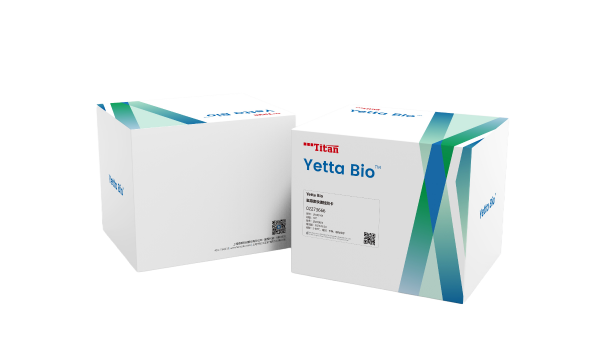
Triadimefon & TriadimenolRapid Test Strip
Rapid Test Reagents · Food Safety Rapid Testing
Colloidal Gold Strip · LOD0.2mg/kg · For fruits, vegetables & grains · 6 samples≤20 min
Spec
10T
SKU
LFG13201
LOD
0.05 mg/kg
GB 2763-2021
Method
Colloidal Gold
Sample Type
fruits, vegetables & grains
Test Time
6 samples≤20 min
Performance
Colloidal Gold · 6 samples≤20 min · For fruits, vegetables & grains · LOD0.05 mg/kg · Shelf Life: 12 months
Storage
Store at 2–30°C away from light
Shelf Life
12 months
Regulatory Basis
Rectification Office Letter [2010] No.50
KJ 201902
🔧Required Equipment & Consumables
🔬Equipment
(1) balance (resolution 0.01 g) , (2) Pipette Set (20-200µL, 100-1000µL) , (3) vortex mixer, (4) Colloidal Gold Analyzer (Optional) , (5) Centrifuge, (6) nitrogen blowdown concentrator
📦Consumables
5mL, 15 mL Centrifuge Tube
📋Test Procedure Guide
1
📝 【Poultry Egg Sample Preparation】
(1) Remove the shell from fresh or refrigerated poultry eggs. Weigh 1.00±0.05 g of egg yolk or egg slurry (yolk and egg white mixed evenly) into a matching 15 mL centrifuge tube. Add 1 tube of Reagent A, then add 4 mL of Reagent B. Shake vigorously for 2 minutes (amplitude: 120 times/minute). Centrifuge at 4000 rpm for 3 minutes at room temperature to obtain the supernatant.
(2) Transfer 3 mL of the supernatant into a 5 mL centrifuge tube. Dry under nitrogen flow at 60°C (a small amount of granular undried oil at the bottom of the centrifuge tube is normal).
(3) Add 0.3 mL of Reagent E to the dried 5 mL centrifuge tube. Shake vigorously for 1 minute (amplitude: 60 times/minute). The liquid in the centrifuge tube is the test solution.
【Chili Powder Sample Preparation】
(1) Weigh 1.00±0.05 g of chili powder sample into a matching 15 mL centrifuge tube. Add 5 mL of Reagent B. Shake vigorously for 2 minutes (amplitude: 120 times/minute). Centrifuge at 4000 rpm for 3 minutes at room temperature to obtain the supernatant.
(2) Transfer 3 mL of the supernatant into a 5 mL centrifuge tube. Dry under nitrogen flow at 60°C (a small amount of granular undried oil at the bottom of the centrifuge tube is normal).
(3) Add 1 mL of Reagent C to the dried 5 mL centrifuge tube. Shake vigorously for 1 minute (amplitude: 120 times/minute). Then add 3 mL of Reagent D. Shake thoroughly for 2 minutes (amplitude: 60 times/minute). Centrifuge at 4000 rpm for 3 minutes at room temperature to obtain the supernatant.
(4) Transfer 2 mL of the supernatant into a 5 mL centrifuge tube. Dry under nitrogen flow at 60°C (a small amount of granular undried oil at the bottom of the centrifuge tube is normal).
(5) Add 0.3 mL of Reagent F to the dried 5 mL centrifuge tube. Shake thoroughly for 1 minute (amplitude: 60 times/minute). The liquid in the centrifuge tube is the test solution.
【Poultry Egg Sample Processing】
(1) Remove the eggshell from fresh or refrigerated poultry eggs. Weigh 1.00 ± 0.05 g of egg yolk or egg mixture (yolk and egg white homogenized) into a compatible 15 mL centrifuge tube. Add 1 tube of Reagent A and then 4 mL of Reagent B. Vortex vigorously for 2 minutes (amplitude: 120 times/min). Centrifuge at 4000 rpm for 3 minutes at room temperature to obtain the supernatant.
(2) Transfer 3 mL of the supernatant into a 5 mL centrifuge tube. Evaporate to dryness using a nitrogen blowdown apparatus at 60°C (a small amount of granular undried fat at the bottom of the centrifuge tube is normal).
(3) Add 0.3 mL of Reagent E to the dried 5 mL centrifuge tube. Vortex thoroughly for 1 minute (amplitude: 60 times/min). The liquid in this centrifuge tube is the test solution.
【Chili Powder Sample Processing】
(1) Weigh 1.00 ± 0.05 g of chili powder sample into a compatible 15 mL centrifuge tube. Add 5 mL of Reagent B. Vortex vigorously for 2 minutes (amplitude: 120 times/min). Centrifuge at 4000 rpm for 3 minutes at room temperature to obtain the supernatant.
(2) Transfer 3 mL of the supernatant into a 5 mL centrifuge tube. Evaporate to dryness using a nitrogen blowdown apparatus at 60°C (a small amount of granular undried fat at the bottom of the centrifuge tube is normal).
(3) Add 1 mL of Reagent C to the dried 5 mL centrifuge tube. Vortex vigorously for 1 minute (amplitude: 120 times/min). Then add 3 mL of Reagent D and vortex thoroughly for 2 minutes (amplitude: 60 times/min). Centrifuge at 4000 rpm for 3 minutes at room temperature to obtain the supernatant.
(4) Transfer 2 mL of the supernatant into a 5 mL centrifuge tube. Evaporate to dryness using a nitrogen blowdown apparatus at 60°C (a small amount of granular undried fat at the bottom of the centrifuge tube is normal).
(5) Add 0.3 mL of Reagent F to the dried 5 mL centrifuge tube. Vortex thoroughly for 1 minute (amplitude: 60 times/min). The liquid in this centrifuge tube is the test solution.
2
🧪 Test Procedure
Before the experiment, carefully read the operating instructions. Before use, allow the test card and the sample to reach room temperature (20–25°C). Remove the test card from its original packaging, open it, label it, and use immediately. Using a pipette, aspirate 200 μL of the sample solution from the previous sample pretreatment step into a gold-labeled microwell. Gently pipette up and down for 30 seconds to completely dissolve the red substance at the bottom of the gold-labeled microwell, and let it stand horizontally. After a reaction wait of 3 minutes, use a pipette to aspirate the red solution in the gold-labeled microwell. Gently pipette up and down for 10 seconds, then aspirate 100 μL of the mixed solution and drip it into the sample well (S) of the test card. Start timing after adding the sample. Alternatively, use the disposable dropper provided in the kit to aspirate the mixed solution and slowly add 3 drops vertically into the sample well (S well). Start timing when the liquid flows. React for 5-8 min. Interpret the result according to the schematic diagram. Results at other times are invalid.


 沪公网安备31011702890552号